How to Visit the Colosseum: Tickets, Entrances & Tips (2026/2027)
How to visit the Colosseum? It may seem simple: buy a ticket, see the amphitheater, move on. In reality, there are different ticket types, special access to the Arena, Underground

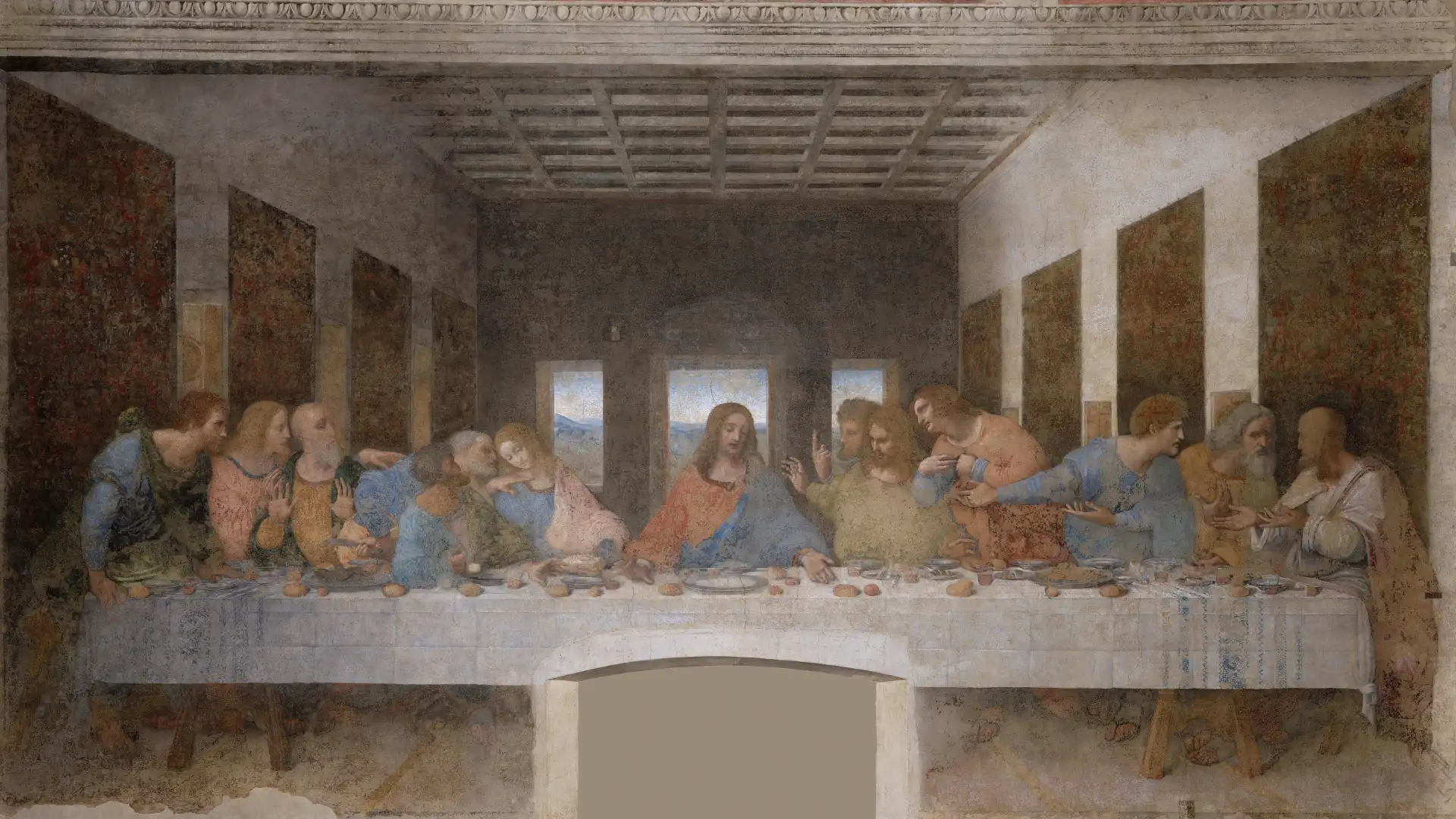
Few works of art are as famous as Leonardo da Vinci’s Last Supper in Milan. Painted at the end of the 15th century, the masterpiece has fascinated visitors, historians, and art lovers for centuries. Yet seeing the painting today is only part of the experience. To understand Leonardo’s Last Supper, it helps to return to the Milan of the Renaissance and discover the story behind its creation.
Why did Leonardo paint the Last Supper in Milan? Why did he choose that particular moment from the Gospel? And why did the masterpiece begin deteriorating so soon after it was completed?
The answers reveal much about Leonardo himself, his extraordinary way of working, and the ambitious world of Renaissance Milan.
When we think of Leonardo da Vinci, we often associate him with Florence. But some of his most important years were actually spent in Milan.
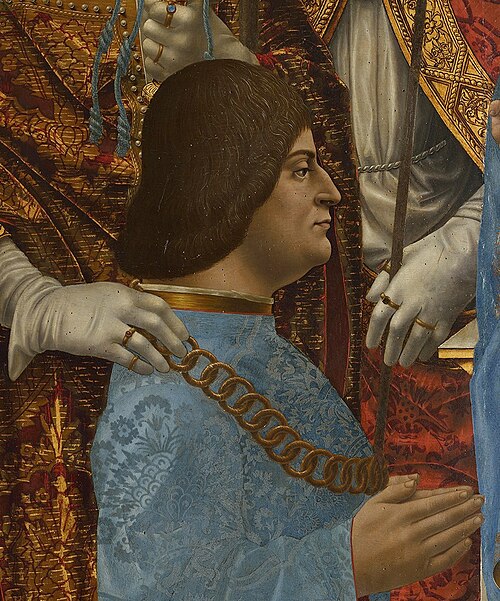
Leonardo arrived in Milan around 1482, entering the service of Ludovico Sforza, known as Ludovico il Moro, one of the most powerful rulers of Renaissance Italy. Milan was an important political, military, and cultural center, and Ludovico wanted his court to rival those of Florence and other major Italian cities.
Leonardo was much more than a painter. He presented himself as an engineer, architect, inventor, military designer, and sculptor, as well as an artist.
During his years in Milan, he worked on numerous ambitious projects and developed some of the artistic ideas that would later make him one of the most celebrated figures of the Renaissance.
It was in this environment that Leonardo received the commission for one of his greatest masterpieces.
Leonardo’s Last Supper was commissioned for the Dominican convent of Santa Maria delle Grazie, where Ludovico il Moro was developing an important religious and dynastic project.
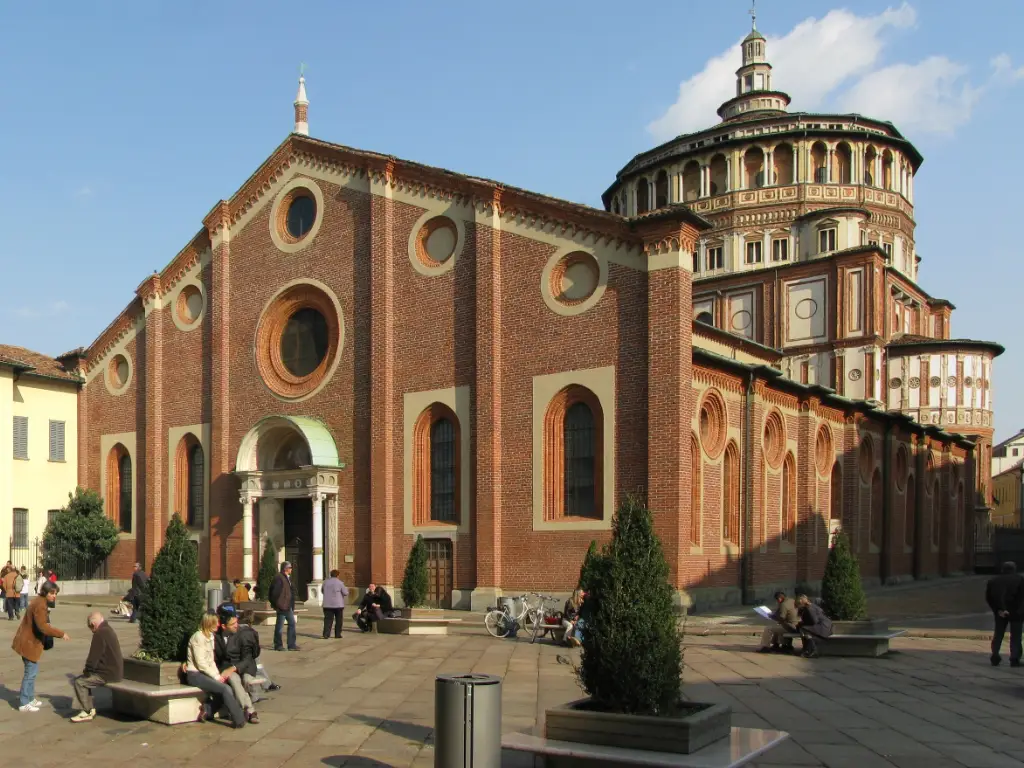
The painting was intended to decorate the wall of the convent’s refectory, the room where the Dominican friars ate their meals. The subject was therefore particularly appropriate: the monks would literally eat their meals while looking at Christ and the Apostles at the Last Supper.
But Leonardo did not approach the subject as a conventional religious image.
Instead of simply representing a sacred event, he transformed it into a dramatic human scene.
The moment he chose was crucial. Christ has just announced that one of the Apostles will betray him. Each Apostle reacts differently: some turn toward Christ, others look at their companions, some raise their hands in surprise, while others appear confused or shocked.
Leonardo wanted to capture the psychological reaction of each individual.
One of the most fascinating aspects of Leonardo da Vinci’s Last Supper in Milan is that it is not actually a traditional fresco.
Leonardo was dissatisfied with the limitations of fresco painting. In a traditional fresco, pigments are applied to wet plaster, meaning that the artist must work relatively quickly before the plaster dries.
Leonardo wanted something different.
He wanted to work slowly, study the expressions and gestures of the Apostles, make changes, and refine details. He therefore experimented with a different technique, painting on a dry wall using layers of materials that allowed him greater freedom.
The decision gave Leonardo the time he wanted, but it also created a serious problem.
The technique was much less durable than traditional fresco painting.
Not long after the Last Supper was completed, the painting began to deteriorate.
Today, much of what visitors see is the result of centuries of restoration and conservation rather than the original surface exactly as Leonardo left it.
Leonardo’s genius can be seen particularly clearly in the arrangement of the Apostles.
Rather than presenting thirteen figures as a static row, he organized them into groups of three, creating movement across the enormous composition.
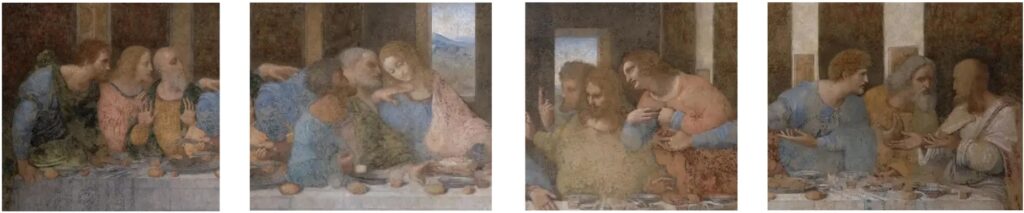
Every gesture contributes to the story.
Some Apostles lean forward. Others pull back. Hands point, open, or gesture in disbelief. Faces turn toward Christ or toward one another.
At the center is Jesus, whose calm and monumental presence contrasts with the agitation surrounding him.
Leonardo was deeply interested in human anatomy, movement, and psychology. In the Last Supper, these interests come together.
The result is an image in which the viewer can almost imagine hearing the conversation that follows Christ’s announcement.
This is one of the reasons that seeing Leonardo’s Last Supper in Milan in person is so powerful. A reproduction can show the composition, but standing in front of the actual wall allows visitors to appreciate its monumental scale and the extraordinary relationship between the figures and the surrounding architectural space.
The history of the Last Supper after Leonardo’s death is almost as dramatic as the story of its creation.
Because of Leonardo’s experimental technique, the painting deteriorated rapidly. Over the centuries, numerous attempts were made to repair or restore it.
The refectory itself also suffered during periods of war and political upheaval. At one point, the room was used for purposes very different from those for which it had originally been designed.
The painting survived, but only after centuries of damage, restoration, and conservation.
One of the most important modern restorations took place between 1978 and 1999. The project was extraordinarily complex and aimed to preserve what remained of Leonardo’s original work while removing later additions as carefully as possible.
What visitors see today is therefore the result of an ongoing history of preservation.
Visiting Leonardo’s Last Supper in Milan is a very different experience from seeing a reproduction in a book or online.
The painting is housed inside the refectory of Santa Maria delle Grazie, and access is strictly controlled. Visitors are admitted in small groups and for limited periods of time in order to protect the fragile masterpiece.
This makes planning a visit particularly important.
For travelers interested in Leonardo, Renaissance art, and the history of Milan, the Last Supper can also become the starting point for understanding the city in which Leonardo lived and worked.
The church and convent of Santa Maria delle Grazie are part of a much larger Renaissance story, connecting Leonardo to Ludovico il Moro, the Sforza court, and the extraordinary cultural transformation of Milan at the end of the 15th century.
The best way to experience the Last Supper in Milan is not simply to arrive, look at the painting, and leave. Understanding the historical context, Leonardo’s working methods, and the dramatic history of the masterpiece can completely change the way you see it.
At Italian ArtVentures, we offer private and tailored experiences in Milan designed for travelers who want to go beyond the standard sightseeing itinerary.
Our Private Milan Last Supper Tour combines the masterpiece with the history of Renaissance Milan, allowing you to discover Leonardo’s world with a knowledgeable private guide.
We can also tailor the experience around your interests, whether you are particularly interested in Leonardo, Renaissance art, Milanese history, or the city’s cultural heritage.
If you are planning to visit Milan and want to experience Leonardo da Vinci’s Last Supper with greater historical and artistic insight, explore our private Milan tours and let us create a personalized experience around one of the world’s greatest masterpieces.
Click here for more info about Leonardo da Vinci’s Last Supper.
How to visit the Colosseum? It may seem simple: buy a ticket, see the amphitheater, move on. In reality, there are different ticket types, special access to the Arena, Underground
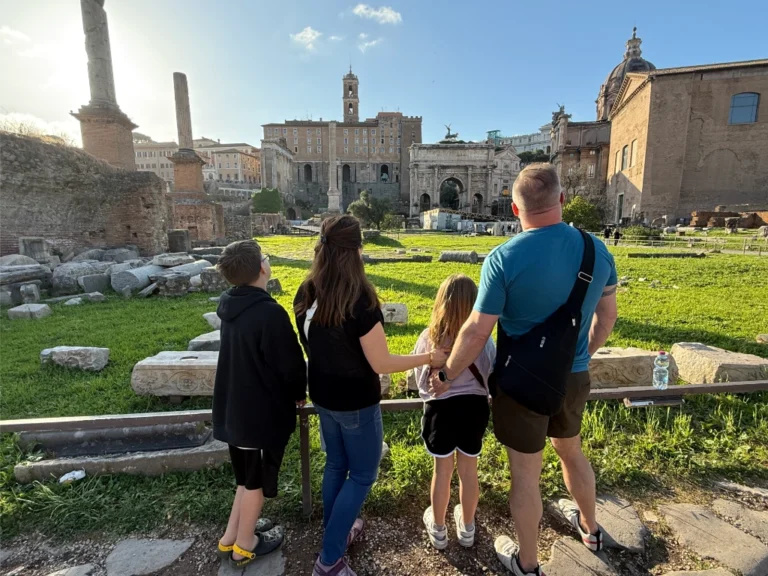
Most visitors to Rome build their entire day around one building: the Colosseum. It’s iconic, it’s spectacular, and it’s absolutely worth seeing. But if you ask anyone who has actually
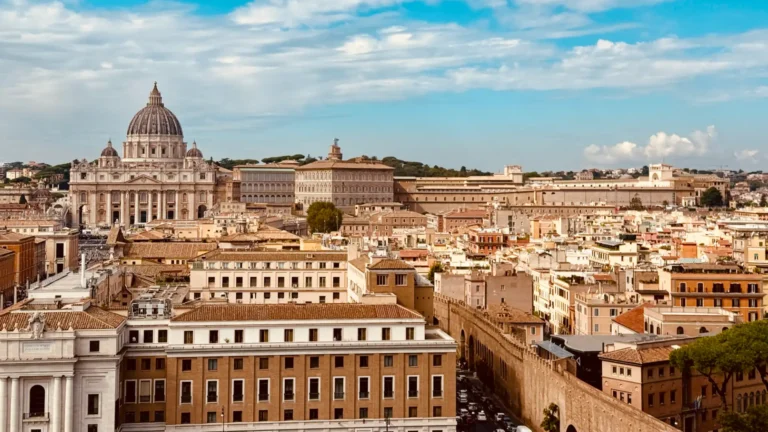
Few places in Rome capture the imagination quite like the Passetto, the secret elevated corridor that connects Vatican City to Castel Sant’Angelo. Hidden above the streets of the historic Borgo