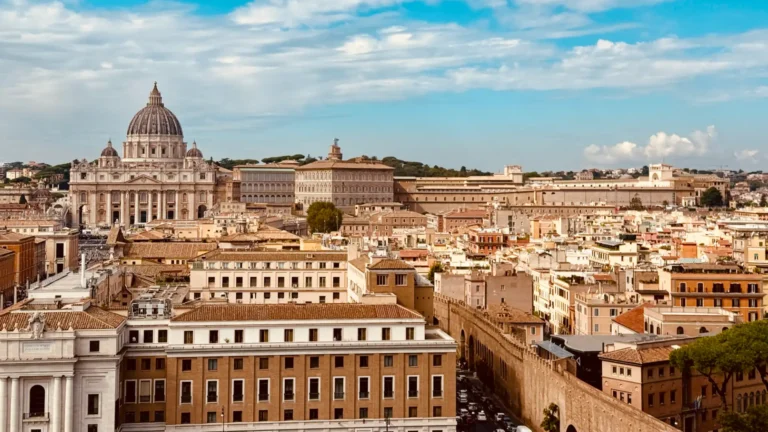
Passetto: Discover Rome’s Secret Papal Escape Route
Few places in Rome capture the imagination quite like the Passetto, the secret elevated corridor that connects Vatican City to Castel Sant’Angelo. Hidden above the streets of the historic Borgo


The House of Augustus on the Palatine Hill is one of the most fascinating sites in Rome. Yet there is a twist: what we call the “House of Augustus” today is actually the home Octavian lived in before becoming emperor, while the residence he built after 36 BC—the true imperial palace—was inherited by his wife Livia and is now known as the House of Livia. Understanding this distinction reveals not only the archaeology of the Palatine but also Augustus’ careful use of symbolism, religion, and architecture to secure his power.
The Palatine Hill was already the most prestigious area in Rome by the late Republic. Legendary tradition held that Romulus founded the city here in 753 BC.
By the first century BC, senators and generals built luxurious mansions overlooking the Forum. For Octavian—later Augustus—choosing the Palatine was both practical and symbolic: it connected him with Rome’s mythical past and placed him directly above the political heart of the city.
The soon-to-be Emperor decided to live very close to the place where, traditionally, Romulus himself had lived.

The House of Augustus as we see it today is, in fact, the earlier residence of Octavian. He acquired it around the 40s BC, from the family of the consul and orator Quintus Hortensius Hortalus. Ancient authors describe it as surprisingly modest: columns of local Alban stone rather than marble, no mosaics, and small rooms. Octavian lived here for decades, presenting himself as a private citizen rather than a king.
In this residence, he had a small study upstairs that he affectionately called “Syracuse” or his “workshop,” where he retreated for concentration. He kept to simple habits, even sleeping in the same small room for many years. This restraint was deliberate: at a time when many Roman leaders flaunted their wealth, Octavian cultivated an image of moderation.
Around 36 BC, while Octavian was renovating this house, a bolt of lightning struck the structure. In Roman religion, such an event was a prodigium—a divine omen. Octavian interpreted it as a sign from the gods. He responded by planning a new and greater residence, one that would incorporate a sanctuary to Apollo, his divine patron.
This new residence is what we should correctly call the House of Augustus. Yet because it later passed to his wife Livia after his death, archaeologists and guides today refer to it as the “House of Livia.” In reality, this was Augustus’ true home as emperor, while the building now labeled the House of Augustus was his earlier, more modest house as Octavian.

The residence begun after the lightning strike was intimately linked to the Temple of Apollo Palatinus, dedicated in 28 BC after Augustus’ victory at Actium. The temple, built on an artificial terrace, stood right next to the emperor’s private quarters. It housed masterpieces of Greek sculpture and the Sibylline Books, sacred oracles that Augustus transferred there as a symbol of divine sanction.
The entire complex included porticoes, gardens, and richly decorated rooms. It became the center of imperial power, setting a precedent for all future emperors who made the Palatine their official residence.
Because Livia inherited this residence after Augustus’ death, later tradition mislabeled it as her house alone. But in truth, it was the architectural and symbolic heart of Augustus’ reign.

Both the so-called House of Augustus (the earlier Octavian residence) and the House of Livia preserve extraordinary frescoes in the Second Style of Roman painting.
In the “Room of the Masks” inside the House of Augustus, painted columns and theatrical masks open onto imaginary stages, blending architecture and illusion. In the “Room of the Pine Garland,” delicate festoons, plants, and winged figures symbolize fertility and abundance.
The House of Livia, meanwhile, features elegant frescoes with mythological and symbolic themes. These decorations were more than art: they were visual propaganda. They linked Augustus’ rule to prosperity, divine approval, and cultural refinement, reinforcing the idea that his reign brought peace—the famous Pax Augusta.
The lightning strike that prompted the construction of the new residence was not just a coincidence but a key moment in Augustus’ self-presentation. By tying his home to the Temple of Apollo, he projected the image of a ruler chosen and protected by the gods.
Apollo, god of light, harmony, and the arts, became Augustus’ divine patron, contrasting with the excesses of Mark Antony, who had aligned himself with Dionysus. The Palatine complex thus symbolized a new era of order and moderation.
The ruins of both the House of Augustus and the House of Livia were excavated in the early 20th century. Archaeologists uncovered the layouts, frescoes, and connections between the private residences and the temple complex.
Today, conservation is a challenge: the paintings are fragile and require controlled lighting and humidity. Visitor access is limited, making the experience all the more exclusive for those who manage to step inside.
Modern visitors to the Palatine Hill can tour the so-called House of Augustus, appreciating its intimate scale and exquisite frescoes. But they should remember the historical nuance: this was Octavian’s earlier home, not the imperial palace. The residence that truly deserves the title “House of Augustus” is what we now call the House of Livia, the building he created after the divine omen of the lightning strike.
Understanding this distinction makes the visit richer. Standing in these rooms, you are not only seeing painted walls but also reading Augustus’ careful message to the Roman people: modesty in appearance, divine sanction in reality, and the birth of a new political order.
The House of Augustus—both the earlier residence and the later palace—is essential to understanding Rome’s transformation from Republic to Empire. The buildings embody Augustus’ political genius: modesty balanced with grandeur, private life intertwined with public symbolism, and religion used as a foundation for legitimacy.
For archaeologists, these houses provide precious evidence of Roman domestic architecture and art. For visitors, they offer a rare opportunity to step beyond monuments of spectacle and enter the personal world of the man who reshaped Rome.
For more detailed info about the House of Augustus, check out the Wikipedia page, which has several references to in-depth articles.
Exploring the House of Augustus is unforgettable, but even more so with the guidance of someone who can explain the nuances between the House of Octavian, the House of Livia, and the Palatine complex as a whole.
At Italian ArtVentures, we offer private tours led by professional archaeologists who bring history to life.
Whether you want to walk through the emperor’s private rooms, explore the Forum, or discover hidden gems of Rome, our tours make the past tangible and unforgettable.
Few places in Rome capture the imagination quite like the Passetto, the secret elevated corridor that connects Vatican City to Castel Sant’Angelo. Hidden above the streets of the historic Borgo
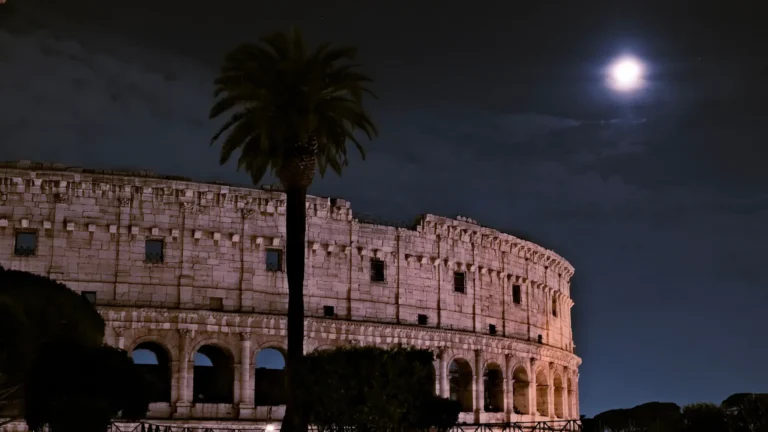
Imagine entering the Colosseum after the gates have closed to the general public. The daytime crowds have disappeared, the summer heat has faded, and Rome’s most famous monument is illuminated
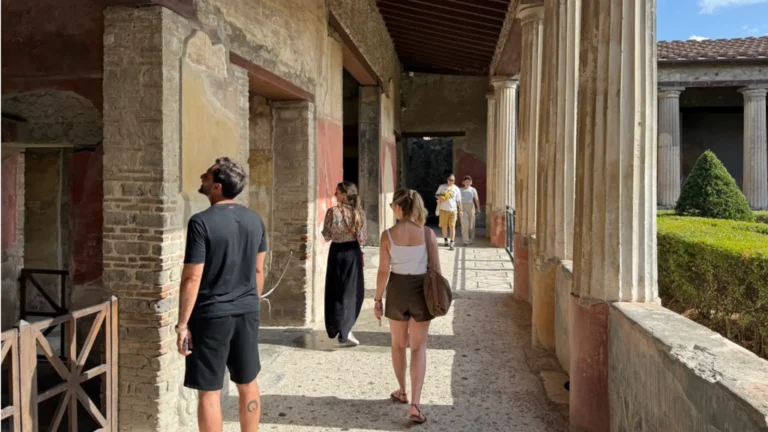
If you are visiting Rome, the allure of the stunning Amalfi Coast area, Sorrento Peninsula and the ancient history of Pompeii is hard to resist. Many travelers ask us at